Sunday, July 8, 2012


Le freak, c'est chic: crazy French hotels


Pretty gîtes are a bit old hat now, but France has plenty of wacky alternatives, from tents hanging in trees to a house that turns with the sun. This selection is taken from a new book, Unusual Hotels: France  La Ferme Aventure, La Chapelle-aux-Bois, Lorraine
crazyfrenchhotels: Ferme Aventure Caravelle

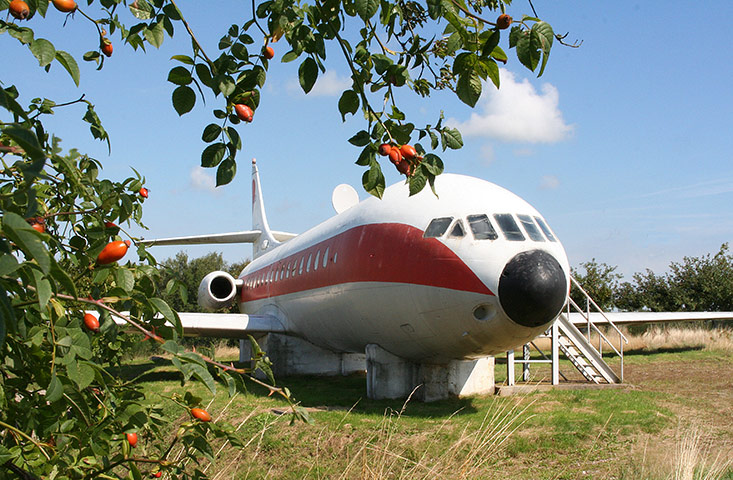
Spend the night on a bed of straw in a hayloft, or in a treehouse, yurt or tipi on this farm in the Vosges. For something even more original, try the glass pyramid or a real Caravelle aeroplane transformed into a “loft”, with a living room and bedrooms set amid a large lawn. For those who dream of sleeping under the stars, but in the warm, the glass pyramid offers a unique experience. There are no curtains, but it is far enough away from other buildings to ensure privacy. • Treehouse (sleeps five) from €90 a night, Caravelle (sleeps six) from €110 a night (€25 heating charge November to March), pyramid (sleeps two) €100 a night, yurt (sleeps five) from €100 a night, tipi (sleeps four) from €65 a night, hayloft (sleeps five) €65 a night. Open from 1 April. +33 3 2930 1179, nuitsinsolites.com

Saturday, July 7, 2012


Travel clinic: The French Riviera


The French Riviera is delightful in September. Antibes makes a great base for a car-free break with its bustling old town, dazzling yacht marina and some of the best beaches on the Côte d'Azur all easily reached on foot or by public transport. Stay at the charming Hotel La Jabotte with just 10 bedrooms around a flower-filled courtyard, and you will be 50m from a sandy beach and a 15-minute walk into the town centre (doubles from €91; jabotte.com). If you want to be closer to the action, rent a beautifully restored fisherman's cottage in the heart of the old town (holiday-rentals.co.uk/reviews/p666950a). The two-bedroom house has availability from mid-September (€950 per week). The hotel and cottage are within walking distance of the station with regular trains along the coast to Cannes, Villefranche, Nice, Monaco and Menton. Buses run between Antibes and Nice Airport 20km away, or a taxi will cost approximately €45–€60.

Friday, July 6, 2012


Take me there: Giant's Causeway, Northern Ireland

Giant's Causeway in Northern Ireland
'Local legend has it that the giant Finn McCool placed these spectacular basalt columns here as stepping stones to reach Scotland': the Giant's Causeway, Northern Ireland. 


The myths, legends and science behind Northern Ireland's most iconic natural attraction will be brought to life with the opening of the £18.5m Giant's Causeway Visitor Centre on Tuesday. An exhibition and audio tour will explain how the spectacular basalt columns were formed by volcanic activity 60m years ago (though local legend has it that the giant Finn McCool placed them there as stepping stones to reach Scotland), while new cliff-top walking trails give improved access to the rugged Antrim coast. See nationaltrust.org.uk/giantscauseway.

Thursday, July 5, 2012


Readers' travel tips: Sardinia

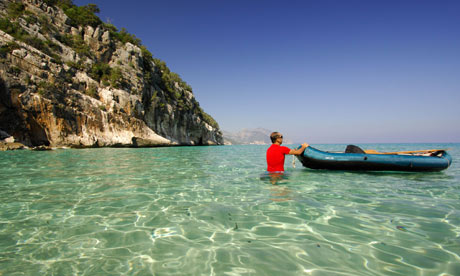
Cala Gonone, SardiniaThe Italian island of Sardinia boasts beautiful beaches and coves, but the mountainous interior, with its isolated towns and villages, is just as fascinating. Been there readers select their best-loved spots


Winning tip: Kayaking in Cala Gonone

The best way to see the stunning coastline near the beach town of Cala Gonone, on the east of Sardinia, is by hiring a kayak for a day. We paddled to some of the area's most secluded beaches, including the idyllic Cala Luna (setting of Madonna's film Swept Away), which is only accessible by boat. It's a fun way to view sealife and the caves along the coast, and a great way to get some exercise on a beach holiday. Kayaks are available on the promenade in Cala Gonone.
hanspanmanc

Cagliari province

Hotel il Monastero, Geremeas
A beautiful hotel situated on the south coast of the island, between Cagliari and Villasimius. Converted from a 19th-century monastery which was later adapted into a farm, the hotel retains many of the original features, and some wonderful old farm machinery. There's a lovely pool if you don't fancy the 10-minute walk to the nearest beach. There's also a miniature golf course and horse-riding in the nearby national park.
+39 070 802200, monasterohotel.it. Doubles from €80 B&B
Sarah2811

Café Van Gogh, Baccu Mandara
A lovely restaurant situated on the stunning coastal road that runs from Cagliari to Villasimius. Quirky features, such as old bikes decorating the garden, a relaxed atmosphere, and a wide choice of mains, starters and desserts – even five or six vegetarian meals, which was a rarity in the region! The owner made us feel very welcomed, often coming over to chat and even offering to make us up some lunch himself when we turned up out of hours (it shuts during the late afternoon). Prices were reasonable, about €10 for a main, and the quality far surpassed the other restaurants in the area charging similar prices. Sit in the garden looking out to the hills opposite, ideally with their pesto gnocci (which is still the best gnocci I've ever had).
+39 070 786082
Sarah2811

Roman ruins at Pula


Laguna di Nora turtle sanctuary, Pula
Keep kids and adults engaged by visiting the fascinating turtle sanctuary on the beautiful south coast. As well as the rescued sea turtles and aquarium, the nearby Roman ruins and beautiful beach with perfectly situated Sant'Efisio church will easily fill a day out. Best of all, we managed this trip, which was one of the highlights of our stay on the island, by public transport from Cagliari.
+39 070 920 9544, lagunadinora.it
Janemcgurk

Sassari

Il Lazzaretto beach
Escape from the city and catch the Porto Conte/Capo Caccia bus from Alghero to the stunning Il Lazzaretto beach. Located in the Porto Conte regional park, the beach is sheltered by a headland on which stands a 16th century tower. With views across the bay towards Alghero, you can wiggle your toes in the soft white sand or cool them in the crystal-clear water while listening to the sound of the cicadas. Plus it's only a mile along a vine- and olive-lined road from the spectacular prehistoric settlement of Nuraghe Palmavera. The 9321 bus departs from the terminal of Via Catalogna in Alghero – a return to the beach costs €2.50.
alghero-turismo.it
mkerry

Agriturismo Nuraghe Tuttusoni
The best meal I've ever eaten was at Agriturismo Tuttusoni. Agriturismos are farms that offer meals and accommodation, helping farmers to diversify and keep going. There was course after course, all fresh and beautifully prepared. We went at the end of the season (late September) and were among the only people there.
Portobello di Gallura, Aglientu, +39 079 656830, nuraghetuttusoni.it
Frandevine
Alghero, Sardinia

Alghero
Sardinia has a reputation as a playground for the rich and famous, but don't let this put you off. Head for Alghero – fly into its airport and it's only a euro on the bus into town. It has a delightful old town, excellent seafood restaurants and plenty of places to sit with a cocktail watching the sun go down. There is a working harbour and the town is not reliant on tourism, although it does get busy in July and August. A gently shelving sandy beach stretches the length of the bay, making it an excellent choice for families. 
carolferguson

Castelsardo
Castelsardo is a picturesque historic town on the northern coast of Sardinia, perched on a volcanic headland. After visiting the citadel, explore the neatly packed and atmospheric streets of the medieval quarters. Better still, stay over a night or two (Smorfiosa & Calarina, next to the cathedral, was charming), and see the town at its best in the evening when restaurants and cafes set up tables among the stairways and doorways. Our pick was Le Cisterne Wine Bar – more than just a wine bar with the best food we ate in Sardinia.
Smorfiosa & Calarina: +39 347 861 2095, bb-smorfiosaecalarina.it; Le Cisterne: +39 079 470 605
mrbowlerhat

Oristano

Bosa and Oristano by bus
After enjoying the beaches and busy old town of Alghero, take the bus down the winding coastal road to Bosa and from there to Oristano. Make sure you sit on the right-hand side for the best views of the cliffs and beaches. Explore the alleyways and narrow cobbled streets between Bosa's multicoloured buildings. Cross the river to gain a better perspective of the Havana-esque street next to the river. Oristano is a smart city with a stunning baroque cathedral and pleasant streets to wander around. The city is also a great base for visiting the famous Is Arutas beach and the Roman site of Tharros. Bed and Breakfast Porta a Mari is a great budget option – it's a traditional Sardinian house within walking distance of the city centre.
B&B at Porta a Mari (+39 3402 883861, portaamari.altervista.org) costs €60 for a double/twin and €35 for a single 
angelavilla

Sardinia,  Italy,  Giara di Gesturi

Giara di Gesturi
The plateau of the Giara di Gesturi stands 500 metres above the surrounding Sardinian farmland: a startling, rocky ecosystem of twisted cork oaks, scrubland and shallow lakes. A thunderstorm was building one September evening when we first encountered the surreal terrain and we were so spooked by its sharp contrast to the rest of the island we left almost immediately. The following morning, feeling braver in the sunshine, we hired mountain bikes and returned to explore. We'd been warned of the feral pigs who can be rather curious of visitors, but the highlight was undoubtedly the scores of miniature wild horses we encountered – another oddity in this curious landscape.
sardegnaturismo.it
gingergigolo

Locanda il Melograno
Avoid the usual celeb haunts and head out to the north-western coast. We stayed in a gorgeous agriturismo in the hills of the picturesque and unspoilt town of Bosa. Amazing beaches nearby, beautiful town centre, great food and lovely friendly locals – it is everything you imagine Italy to be right down to the buildings the shades of ice-cream.
+39 339 469 7178, locandailmelograno.com
missamyb

La Pelosa Beach
La Pelosa beach, at the north-western tip of Sardinia, is a triangle of glowing white sand set below a watchtower and surrounded by water with the clarity and colours of the Caribbean. It is visual perfection and it is very, very popular. It is also rather small. In high summer you will find that every inch is covered by either a towel or a lounger. If there is not space to lay a towel, sun worshippers simply stand on the sand (looking very stylish, as is the Italian way). If there is no space to stand on the sand they stand in the sea. It is a spectacle to behold and you must visit, but unless you plan to get there very early in the morning, don't bother bringing your towel and parasol.
bpoynton

Carbonia-Iglesias

Grotte di Su Mannau, Fluminimaggiore
This five-mile system of underground caverns is truly magical, consisting of tunnels and rock rooms encrusted with minerals and festooned with magnificent stalagmites and stalactites that glitter in the lamplight. They've been created by the underground courses of the rivers Placido and Rapido. The first cave has walkways, but if you want to explore further you can go in with a group of experienced explorers. Not for the claustrophobic, or if you're afraid of bats, but breathtaking even if you just visit the first vast cavern.
Via Vittorio Emanuele, sumannau.it
Benatech

Nuoro

Hotel Su Gologone, Oliena
This is an amazing hotel. We stayed here as part of our honeymoon touring Sardinia a couple of years ago and it was our favourite location. The rooms are quirky and individual, the views of the mountains are stunning and the food is just incredible. We went half-board and struggled to finish the four-course dinners. Tip: don't be tempted to gorge on the antipasti or pasta courses or you'll never finish the suckling pig – the hotel speciality which is famous across the island. If you're a foodie, this place is a must.
+39 0784 287512, hotelsugologone.com. Doubles from €140 B&B or from €105pp half-board
Claresuter


Wednesday, July 4, 2012

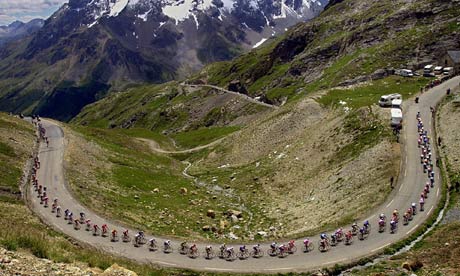
‘Instrument of torture’ … Tour cyclists climb the Galibier pass between Briancon and Courchevel

Your own Tour de France: cycling the Marmotte 'sportive' in France

The punishing Marmotte 'sportive' event in France is for amateur cyclists, but it gives our exhausted writer a taste of riding like a pro
"You think 10 weeks' preparation will do it?" asked Huw. My friend Tom and I looked at our feet. "Most people train for a year. Even then, plenty fail."
We had contacted Huw Williams, trainer of cycling's elite, in desperation to help prepare us for the Marmotte, a legendary one-day "sportive" in the Alps. Sportives are timed cycling events for amateurs, with feed stations, marshals and medals.
Taking place on the first weekend in July, the Marmotte covers 109 miles and 5,180m of ascent over four of the Tour de France's infamous cols, and is regarded as the toughest sportive in Europe, if not the world.
Tom and I had been riding together for a couple of years: gentle jaunts through Surrey lanes, Tom in baggy board shorts, me with my middle-aged girth. The rides invariably involved a pub stop, and I believe it was at one of these that Tom, perhaps emboldened by our refuelling, had suggested we do the Marmotte, in just a couple of months' time. Similarly emboldened, I'd said: why not, sounds like a hoot.
Tour operator La Fuga specialises in packages for sportives. Tickets sell out fast, but La Fuga had had a couple of late dropouts – people who didn't think they'd done enough training, apparently. Tsk. We were in.
"You two are in for a world of problems," said Huw, holding up the course profile, which looked like a set of shark's teeth. "It's 18 miles uphill from the start, then 20 minutes downhill very fast. Then the Telegraph and Galibier for the next 20 miles, the worst thing in your life, like an instrument of torture. If you get up the Galibier alive …"
("If." Nice.)
"… you've got 30 miles of downhill. People have died, ridden straight off the mountain through exhaustion. Then come the tunnels – pitch black, potholed … Just pray."
Could it get any worse?
"The worst is yet to come," said Huw. "After 100 miles, when it's baking hot, you've got to get up the Alpe d'Huez to the finish."
Huw brought out the form I'd filled in: he'd scrawled the word "WEIGHT!!!!!!" on the top. To the question about my weaknesses and strengths, I'd replied going uphill and downhill respectively. He rolled his eyes and gave us a training plan for the first week: it used words such as periodisation and cadence pyramid workouts. On Sunday evenings, we'd have to email Huw our results, including weight, resting pulse and sleep pattern, get feedback, and then receive a new week's programme.
Huw's shock doctrine worked. We embraced our new training regime with gusto. We stopped talking about work or politics on our rides. In fact, unable to breathe most of the time, we stopped talking. On downhill stretches, we compared heart rates, and debated power bars and gear ratios. We may have been becoming better cyclists, but lordy we were dull.
And we'd end most rides with a trip not to the pub, but to a bike shop – in our case, that shrine to all things bike racing, Sigma Sport in Hampton Wick, Surrey – because, as all men know, the more money you chuck at unnecessary gadgets, the better you get.
Like La Fuga, Sigma is riding cycling's explosion in popularity. Britian's high-end bike market grew by 30% in 2010, catering largely to the wealthy Mamil (middle-aged man in Lycra) who will spend up to £10,000 on a bike. In Sigma, Mamils (and a few Mawils) stared lovingly at sinuous machines as if they were at the Uffizi.
In a Sigma back room, we met Nick Frendo, who measured us with the precision of a Savile Row tailor. He put us and our bikes on rollers, making minute adjustments to saddles, handlebars and pedals that can make the world of difference in an activity that involves repetition of the same movement tens of thousands of times. Nick said I'd been pedalling with my knees sticking out, like a circus bear, and losing a lot of efficiency.
Over the next two months, our rides got faster and longer. Centuries, as cyclist call 100-mile-plus rides, became the norm, the riding much more comfortable after Nick's efforts. The weight came off but my thighs were so sore I had to sleep on my back.
I may have become mildly obsessive, but Tom, erstwhile laid-back wearer of baggy shorts, would slap caffeine patches on his arms on rides and had removed the tiny, plastic dust caps from his tyre valves to save weight.
"What have you done to my boyfriend?" his partner emailed. "He's wearing his heart-rate monitor in bed!" Mercifully, she neglected to say what activity he was measuring.
Finally, we took the train to Grenoble. To the smell of burning clutch, the La Fuga people drove us up 21 hairpins towards our hotel at the top of the Alpe d'Huez. Could a road go on climbing for so long without hitting the sky? Tom and I sat in silence.
The next morning we were up at 4.30, eating mountains of food from the breakfast buffet, surrounded by cyclists so stick thin it was like being in a Lowry painting. Outside, La Fuga's mechanics were working on our bikes and filling our bottles with energy drinks. It felt like being a pro.
Then we were flying down the Alpe in the freezing dawn, fingers so numb they could hardly work the brakes, to the start line in Bourg d'Oisans, where we joined the other 7,000 competitors, chatting in myriad languages, wearing club jerseys from all over Europe.
The hooter sounded and we were off. Huw had warned us not to get dragged into an insane speed at the start, but that was impossible: I found myself flying along in a big bunch at 30mph. I'd lost Tom already. Soon we hit the first climb. Chatting ceased and a sepulchral silence fell, riders locked into individual battles with gravity.
After two hours, I reached the Col du Glandon and dropped straight on to the descent, snaking down via a slew of hairpins. The road was slippery from discarded gel and energy bar wrappers. An ambulance attended a tangle of bodies and bikes, blood staining the tarmac. That was sobering: a rider had been killed on the Glandon in 2005.

Near the resort of Valloire

Soon I was climbing the Telegraph, the coolness of early morning a distant memory as sweat ran in rivulets down my face. At a feed stop in the village of Valloire, riders plundered fruit and sandwiches like vultures with fresh kill. Soon after, the Galibier came into view. I wondered what the fuss was about, then looked up and saw Huw's "instrument of torture" reaching to the heavens, a series of steep switchbacks in bare rock. I didn't know whether to laugh or cry, so I did a bit of both.
For the next two hours, as meadows gave way to barren rock, then vertical banks of snow, I suffered as I have never suffered before, my feet on fire, my calves cramping, my head pounding from the altitude. Once more, riders were in cocoons of pain, monastic silence punctuated only by breathing and the odd creaky crank, which was strangely irritating, like rustling sweet wrappers at the cinema during a scene of great poignancy.
Over the summit at 2,646m, a 30-mile blaze downhill, and then those pitch-black tunnels, where the red tail lights of other bikes hit me in the face like a hammer. After 100 miles and 4,000m of ascent, there was the small matter of the Alpe d'Huez – 10 miles and 1,150m of ascent in a white-hot July afternoon.
As I hit the first of the 21 hairpins, it struck me that the race's name, after an Alpine groundhog, could not be more apposite. Like the Bill Murray film, this day involves repeating the same things – going up only to go down again – to end up where you started. But as I dragged myself on, passing riders pushing their bikes and Lycra-clad forms slumped by the roadside, some vomiting, it came to me that, like in the film, perhaps the repetition contains a lesson: that hills are a metaphor for life – it's shitty when you're struggling, but the pain ends when you reach the top, and you're stronger for it.
Or maybe I was delirious, and they will rename that hairpin Pseud's Corner in my honour.
My heart-rate monitor started making the kind of rapid beeping that precedes any flatlining scene in Casualty. So, not wanting to actually witness myself dying, I turned it off.
Around Dutch Corner, through a tunnel of people dressed in orange – which greatly added to my now hallucinative state – counting down the hairpins, daring to look up occasionally at the cluster of buildings at the summit, so close, so very close …
One last bend, and there was the finish line, across which I rode with tears in my eyes, as exhausted and exhilarated as I've ever been. Tom was waiting for me, beer in hand. He'd blitzed the course.
"It was the dust caps," I said.
"Obviously," he replied.
"Next time," I said. "Next time."

• The three-night Marmotte package was provided by La Fuga (020-8144 1441, lafuga.cc): it costs from £850pp, including half-board accommodation, and team jersey. Huw Williams provided coaching: his La Fuga Performance service costs £200 for three months. The bike fitting session provided by Nick Frendo (sigmasport.co.uk) costs £120. Rail Europe (raileurope.co.uk) provided travel to Grenoble: returns cost from £108. For forthcoming cycle sportives, see cyclosport.org

Tuesday, July 3, 2012


Olympic runs: the best places to stay for the Games within easy reach of London

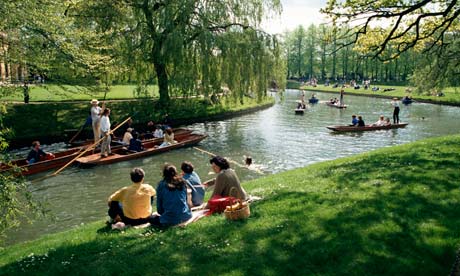
Punting on the River Cam, Cambridge
Coming to London for the Olympics but don't want to stay in the city? We've picked the loveliest towns, villages and rural retreats, most within an hour by train, and found stylish hotels and B&Bs with availability but without the price hikes


Cambridgeshire

From punting on the river, exploring the grand university colleges and picnicking in the parks to dancing to live music at night, Cambridge gets a first for its attractions. This summer, there's a Sculpture Promenade and Han China exhibition at the Fitzwilliam Museum (fitzmuseum.cam.ac.uk) and sports-related exhibitions and events at the Cambridge and County Folk Museum (folkmuseum.org.uk).
The new Varsity Hotel (01223 306030, thevarsityhotel.co.uk, doubles from £165) has a rooftop terrace with a cinema, a spa, and rooms with four-posters and Union Jack pouffes.
• 45mins to London's King's Cross station, or to Stratford for the Olympic Park (via Tottenham Hale) in around one hour 20 minutes

Oxfordshire

Oxford's charms are similar to those of Cambridge: you can poke around the grand college buildings, go punting on the river, or embrace the nightlife, shopping, and burgeoning microbreweries trend – look out for pubs serving beers from the Compass, Shotover and White Horse breweries. There are two tastefully arty hotels in the centre: the Old Bank (01865 799599,oldbank-hotel.co.uk , limited availability, doubles £132) and the Old Parsonage (01865 310210,oldparsonage-hotel.co.uk , doubles £220).
• Paddington 55 minutes
The posh Oxfordshire town of Henley-on-Thames is quintessentially English, boasting rowing regattas, historic pubs frequented by royals, manor houses and iron age forts nearby. The Hotel du Vin (0845 365 4438,hotelduvin.com , doubles from £130) is a modern boutique hotel with a Georgian facade, just 50m from the riverbank.
• Paddington 58 minutes, via Twyford

Gloucestershire

The Cotswolds has dozens of picture-perfect honey-coloured villages, thatched inns, amazing restaurants, and posh farm and antiques shops. To randomly pick one of dozens of fabulous hotels, The Wheatsheaf Inn (01451 860244,cotswoldswheatsheaf.com , little weekend availability, doubles from £130) in Northleach has hip decor and celebrity fans.
• Paddington to Kemble (20 minutes by taxi to Northleach) 1 hour 18 minutes

Hertfordshire

The city of St Albans, with its Roman museums, golf courses and children's wildlife attractions, is also home to a 500-year-old country house hotel, St Michael's Manor (01727 864444,stmichaelsmanor.com , doubles £165), which is offering free taxis to the station during the Olympics.
• St Pancras 17 minutes
Vincent Van Gogh once walked from London to Old Welwyn to visit his sister, so it's definitely within easy reach of the capital. The Welwyn area has several attractive country homes to hide away in, just like Elizabeth I did at nearby Hatfield. Only the Tudor banqueting hall of Hatfield Palace, and the wonderful gardens, remain, but on the site is Hatfield House (hatfield-house.co.uk), an example of superb Jacobean craftsmanship. In Datchworth, the Coltsfoot (01438 212800,coltsfoot.com, doubles £139) has 15 suites, with exposed timbers. In Welwyn, the White Hart (01438 715353,thewhiteharthotel.net, doubles £115) is a 17th-century coaching inn.
• Welwyn North to King's Cross 27 minutes

Kent


Broadstairs


Geoffrey Chaucer would recognise Canterbury today, from the towering cathedral – England's oldest – ruined abbey, castle, churches and city walls. But the city these days also is a great shopping destination, and a hub for the arts. Head to the King's Mile for quirky, independent shops and then catch a show at the Marlowe Theatre (marlowetheatre.com), which has a lovely riverside restaurant. The House of Agnes (01227 472185, houseofagnes.co.uk, limited availability, doubles from £89) dates from the 13th century, with a walled garden, an honesty bar and a library.
• 56 minutes to London St Pancras
Chichi Whitstable and arty but kitsch Margate are the obvious Kentish coast options. Broadstairs is truly the British seaside: sandy beaches, Punch and Judy shows; fish and chips; ice-cream parlours and old-fashioned arcades among higgledy piggledly Victorian architecture; fishermen's cottages and cobbled streets. Dickens holidayed there regularly for 20 years, and you can stay at Bleak House, where he wrote David Copperfield, on the cliffs overlooking Viking Bay. It has recently been restored and has four luxury bedrooms (01843 865 338,bleakhousebroadstairs.co.uk, doubles from £195), plus tearooms and a smuggling museum in the basement. Or try Belvidere Place, a gorgeous contemporary boutique hotel (01843 579850, belvidereplace.co.uk, doubles from £130).
• 1 hour 22 minutes to St Pancras
The most atmospheric area of elegant Tunbridge Wells is the Pantiles, a Georgian colonnade with specialist shops, restaurants and bars. Some B&Bs and attractions are offering discounts over the Olympic period – go to visittunbridgewells.com for details. The Brew House (01892 520587,thebrewhousehotel.net, doubles from £75) brings gloss to a period building.
• Around 50 minutes to London Cannon Street or Charing Cross
Around Ashford – itself unlovely, but with good rail links from Ashford International – are country pubs, vineyards and several charming villages, such as Pluckley, where the Darling Buds of May was filmed. Just outside, Elvey Farm (01233 840442, elveyfarm.co.uk, doubles from £135) has stylish rooms in the converted stables, barn, oast house and granary, surrounded by Kentish countryside. The top suite has exposed rafters and a hot tub. Tenterden is another very cute village, with a 10-mile steam train ride to Bodiam, the Chapel Down vineyard and bargain B&Bs (tenterdentown.co.uk).
• 35 minutes to St Pancras

Sussex

With tons of fun on offer, Brighton is almost a (smaller) alternative to London. It's great for foodies (especially vegetarians), party people, shoppers, the gay scene, kitsch fairground rides, arts and sports. There is masses of accommodation in the city too: top picks include Kemp Townhouse (01273 681400,kemptownhousebrighton.com, doubles from £95), Drakes (01273 696934, drakesofbrighton.com, doubles from £115, limited availability) and The Twenty One (01273 686450,thetwentyone.co.uk, limited availability, doubles from £95). NeighbouringHove is more chilled.
• London Victoria 52 minutes
East Sussex's county town, Lewes, is also its best-looking, with unspoilt buildings in an idyllic setting along the banks of the River Ouse, flanked by rolling South Downs countryside, perfect for rambling. Stay at the Pelham House Hotel (01273 488600, pelhamhouse.com, doubles from £190), a boutique hotel in a restored 16th-century townhouse with views over the Downs.
• Victoria 1 hour 10 minutes
East and West Sussex meet Surrey and Kent in East Grinstead, an ancient market town with 14th-century timber-framed buildings, a 17th-century almshouse and an imposing 18th-century church. Winnie-the-Pooh's adventures took place in nearby Ashdown forest (ashdownforest.org ), and the Bluebell Railway (bluebell-railway.co.uk) heritage line's steam locomotives chug past. The best hotels are slightly out of town: Alexander House (01342 714914,alexanderhotels.co.uk , dinner, bed and breakfast £159pp, a five-star country house hotel and spa, or Gravetye Manor (01342 810567, gravetyemanor.co.uk, limited weekend availability, doubles from £290), a 16th-century house with lovely gardens.
• 55 minutes to Victoria

Essex

Colchester Castle, Essex, UK

Colchester is Britain's oldest recorded town and was once the capital of Roman Britain. Visitors can brush up on their history at the well-preserved castle and several museums. The North Hill Hotel (01206 574001, northhillhotel.com, doubles from £64.50) has some cute beamed rooms with sloping ceilings; or try Trinity Town House B&B (01206 575955, trinitytownhouse.co.uk, doubles from £75).
• Around 45 minutes to Stratford or London Liverpool Street.
Towards the coast, the new Life House Spa (01255 860050,lifehouse.co.uk, £149) in Thorpe-le-Soken makes a really relaxing retreat from the city, and offers an array of treatments, gyms and fitness classes, a great pool, gorgeous gardens, creative health food and bikes to borrow to cycle to the sea.
• Free pick-up from Thorpe-le-Soken station. Trains to Stratford (1 hour 10 minutes) or Liverpool Street (1 hour 20)
Saffron Walden is a charming market town with medieval and Tudor buildings, small cafes and craft shops in the historic Rows streets, and the wonderful Bridge End Garden with its hedge maze and recreated Victorian gardens. Debden Antiques (http://www.debden-antiques.co.uk/find-us-i-4.html ) is a 17th-century barn with a fabulous collection from Persian rugs to decorative clocks, and outside town are some of England's vineyards.The Cross Keys (01799 522207,theoldcrosskeys.co.uk, doubles from £90) is a timber-framed pub with six new rooms featuring iPod docks and freestanding baths.
• Audley End (two miles from Saffron Walden) is 53 minutes from Liverpool Street)

Surrey

Near the beautiful North Downs, a great area for walking or cycling, are gorgeous villages such as Sheer and Haslemere, and appealing towns such as Dorking, near to Box Hill, focal point for spectators in the Olympic road cycling, and the setting of scenes from Jane Austen's Emma, near which you can stay at the Denbies Wine Estate (01306 876616, denbies.co.uk, fully booked during the cycling, otherwise available Monday to Thursday, doubles from £98).
• London Waterloo is 50 minutes from both Dorking and Boxhill & Westhumble stations

Suffolk

The Swan @ Lavenham

Suffolk is a lovely county to explore, especially its old wool towns, once the focus of medieval England's textile trade. Pretty Lavenham has historic buildings, a 16th-century guildhall, a "wool church", antique shops and art galleries. The Old Rectory (01787 247 572, lavenham-old-rectory.co.uk, doubles from £225) is a stunning Georgian house with cosy pastel-coloured rooms with modern bathrooms, and three acres of gardens. Or in the centre, The Swan (01787 247477,theswanatlavenham.co.uk, doubles from £195) has a real sense of history with its timber beams, leaded windows and medieval wall hangings, but modern furnishings. Other notable villages nearby include Long Melford and Stoke By Nayland, where The Crown (01206 262 001,crowninn.net, limited availability, doubles £120) is a revamped inn with luxury rooms.
• Colchester is a 30-minute taxi ride from Lavenham; direct trains from Colchester to Stratford take 45 minutes

Hampshire

With a 900-year-old cathedral, quaint shopping streets and a medieval Great Hall, Winchester is a stunning historic base among rolling countryside. Day trips could be to Laverstoke Farm (laverstokepark.co.uk) Portsmouth, Southampton, Jane Austen's home in Chawton, or even the Isle of Wight. In town, the Hotel du Vin (01962 841414, hotelduvin.com, doubles from £145) is set in an early Georgian building dating from 1715.
• One hour to Waterloo

Berkshire

Pangbourne is a pretty village on the river Thames with views of the Chiltern Hills, and for a day trip, Basildon Park (nationaltrust.org.uk), an 18th-century Palladian mansion with 400 acres of parkland. The Elephant (0118 984 2244, elephanthotel.co.uk, doubles £40 during the Olympics, limited availability) is an opulent Empire-themed hotel in the village.
• London Paddington 51 minutes
Windsor is a must for many tourists, with its palace, Great Park or – for kids – Legoland (legoland.co.uk). With the rowing at nearby Dorney, it's busy for the Olympics, but try staywindsor2012.co.uk for a list. Alternatively, not far away is glorious Stoke Place (01753 534790,stokeplace.co.uk, doubles from £105), a beautifully decorated classic Georgian boutique hotel in Stoke Poges, famous for Thomas Gray's Elegy Written in a Country Churchyard.
• Windsor-Paddington 29 minutes; Gerrards Cross-London Marylebone 25 minutes

Buckinghamshire

The hills and woodlands of the Chilterns form a beautiful area for walks and country pubs. You could base yourself in Great Missenden, a quaint village where Roald Dahl lived and which is home to a museum about his work (roalddahlmuseum.org). The Nags Head Inn (01494 862200, nagsheadbucks.com, doubles from £140, not 28-30 July) is a transformed 15th-century inn doing Anglo-French food. Walk from Princes Risborough to Wendover and you'll pass Chequers, the prime minister's country retreat. Or book a stay at stunningly stylish The Crown(01494 431283, thecrownamersham.com, doubles from £95, not 4 August) in Amersham – it's hard to believe you can reach somewhere so rural and lovely on the tube, yet it's the last stop at the western end of the Metropolitan line.
• 46 minutes to Marylebone from Great Missenden; 50 minutes on the Metropolitan line from Amersham to Baker Street, or 39 minutes by overground train to Marylebone
All prices and availability correct for the Olympics period at time of going to press. Fastest train times quoted; check nationalrail.co.uk for delays/disruptions during the Games
• This article was amended on 30 June to correct the sentence which stated Hastings and Rye are in Kent. They are in East Sussex


Monday, July 2, 2012


A coastal road trip in Ecuador


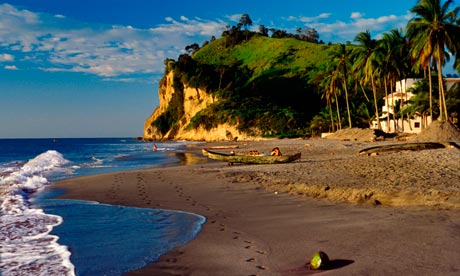
Ecuador coast
Julian Assange's hoped-for bolthole, Ecuador, has much to justify an escape. Our writer drives part of a new route along the Pacific coast offering archaeology, great beaches, and the island known as the poor man's Galápagos

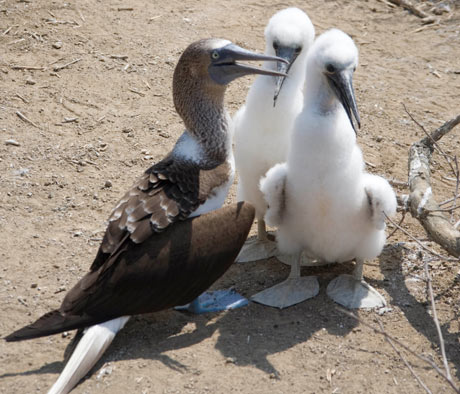
Large, beautiful and totally unafraid, the male blue-footed booby looks us straight in the eyes, then utters a squawk. Two chicks, practically as big as their father but covered in white fluff, take the cue and begin a falsetto squeal, shuffling on large webbed feet. Their half-metre nest sits across the path: we're on their territory and they don't like it. 

The sky is busy with more boobies, wingspans close to a metre. Returning from distant fishing expeditions, they swoop in to riotous receptions at nests scattered as far as the eye can see.

"The males and females take it in turns to sit on the eggs and protect their young …" says Gonzalo, my park guide, pointing to turkey vultures patrolling above. "There are plenty of airborne predators." 

It is day two of my drive north along the extraordinary Pacific coast of Ecuador, following part of the recently developed Spondylus route, an 850km trail between Esmeraldas in the north and the Peruvian border. The route is named after an oyster-like bivalve found in the shallow coastal waters here, whose shell was used as currency by Indian groups such as the Valdivia for more than 5,000 years.

The route, launched three years ago, follows almost the entire Ecuadorean coastline: its narrow roads wind through small ports, beach resorts, tropical forest and stretches of deserted golden sand with some of the best surf on the South American Pacific coast. I would be driving a small section, heading north from Ecuador's largest city, Guayaquil.

My guide, Marcello, and I drive out of the city through banana plantations and tropical forest, arriving at midday at the small town of Santa Elena to visit the extraordinary Los Amantes de Sumpa. Excavations here in the 1960s exposed a large burial ground of a hunter-gatherer people dating back more than 8,000 years. A museum was erected in situ, the open graves protected by simple buildings.

We view an extraordinary range of artefacts of the Las Vegas and Valdivian cultures: fine bone needles, pottery and delicate pink necklaces made from spondylus shells. Most remarkable of all are the two skeletons known as the Amantes (lovers): they lie enlaced in a shallow tomb, face to face in a bony embrace that has lasted for more than 5,000 years.  

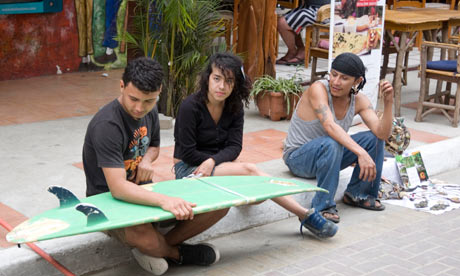
Montañita is a top surfing venue.We drive on to Salinas, a seaside resort popular for its white beaches and calm water. It feels Mediterranean, but a quick paddle in the bracing 15C of the Humbolt current reminds me more of summer seas in Cornwall. We lunch in a beachside cafe on ceviche, a delicious mix of marinated prawns and fresh corn, with aji, the chilli sauce served with all Ecuadorean meals.


We continue north, passing mounds of gleaming sea salt harvested from vast drying pans, and sleepy villages with long canoes drawn up on the beaches. But at Montañita, some 100km to the north, bronzed beach babes with nose studs stroll on the sands, while in trendy cafes on the front men babble into iPhones in languages from Russian to Hebrew and Arabic.

"This is one of the surfing venues of the Ecuadorian, or even the South American Pacific coast …" drawls a dude called Gabriel, sitting at the door of his surf shop. "It's a real party town."  He explains that the perfect rollers here are due to the combination of the Humbolt current meeting the warm El Niño just offshore. "It's one of the best surfing breaks on the coast – a real experience, man!"  Sadly, that day, the sea is unusually calm.

The road then climbs through small hills, where the tarmac is dotted with strange black leaves, which suddenly sprout legs and move as we pass.  "Tarantulas," says Marcello with a grin, swerving to avoid  the nearest large arachnid scuttling for shelter. "They're probably warming up – or going hunting."

In the warm twilight we arrive at the spectacular Mantaraya lodge, an adobe hotel built high on a knoll overlooking the fishing town of Puerto Lopez in the heart of the Machalilla national park. Drinking a beer on the terrace as the brilliant stars come out, I find it strange to think that the many bird species we can hear in the forest are also to be found on the Galápagos, some 700 miles due west.

At 6.30 next morning, the wide beach in Puerto Lopez is already crowded. Long fishing canoes with outboard motors are landing after days at sea, attended by squadrons of pelicans who swoop on discarded fish. Hammerhead sharks, dorados, and large mackerel-shaped wahoos are stacked in piles and gutted by rows of cheerful women. They greet their  husbands and boyfriends back from the sea with affectionate hugs, then the men load waiting pick-ups and vans for the long climb inland.

Bluefooted Booby with chicks on  Isla de la PlataI board a high-speed launch along with two French tourists and, dodging pelicans, we speed out to Isla de la Plata on the distant hazy horizon. Known as the poor man's Galápagos for the richness of its bird life, the island, just 4km by 5km, is the westernmost part of the Machalilla national park.


Visitor numbers are carefully controlled: a maximum of 200 people are a day are allowed to land. Winged creatures are very much at the top of the pecking order. Blue-footed boobies, albatrosses, frigate birds, peregrine falcons and even tiny hummingbirds thrive on this isolated rock rearing out of a sea teeming with marine life.

I pay my $15 park entry fee to the boatman, and after a bumpy hour we are landing on a small beach beneath high black cliffs noisy with birds.

"Many others have come ashore …"  our guide, Gonzalo, tells us as we climb a rocky path through woods.  "People from the Valdivian culture came here in immense balsa wood rafts thousands of years ago, using the island for trading and religious purposes. Both they and the Incas seem to have regarded the island as a sacred place – perhaps a neutral place where coastal peoples could meet."

From the top the view is extraordinary, the distant ranges of the Andes looming like high clouds on the horizon.

"Your Francis Drake used to anchor here, raiding Spanish galleons, heading down to Cape Horn laden with gold …"  Gonzalo goes on. "They say he buried treasure here, but nothing has ever been found." 

After a couple of hours exploring we head back to the shore. I dive in to the water and spend a happy 10 minutes floating over pastel coloured coral surrounded by innumerable inquisitive fish.  The water is cold enough to take my  breath away, but suddenly it feels as if the hot tap has been turned on.  In a flash I realise that I have just swum from the cold Humboldt into a questing tendril of El Niño, experiencing at first hand a phenomenon  that helps drive the entire global climate. That, I think, towelling myself down as we head back to the mainland, is not something you can do every day. 

• Accommodation was provided by Mansíon del Rio in Guayaquil (+593 4 256 6044, mansiondelrio-ec.com) and at Mantaraya Lodge (+593 2 336 0887, mantarayalodge.com). British Airways and American Airlines (britishairways.com) provided flights via Miami. Returns cost from £950. Guides and car hire were provided by Surtrek (+593 22500 134, surtrek.com). For more information see Latin American Travel Association (lata.org. Heathrow Express (heathrowexpress.com) provided airport travel: returns from Paddington cost £32

More reasons to escape to Ecuador
• Quito, the capital city, is one of South America's most appealing, full of colonial buildings and churches, good for craft shopping (there's a "Plaza de Ponchos" for goodness sake!), museums about indigenous culture and eating out, and surrounded by breathtaking scenery (it sits at 2,850m). The historic centre has just undergone a project of "revitalisation", around one of the most traditional streets, La Ronda, full of Andalucían-style buildings, vines, arches and columns.

• Ecuador has some spectacular train routes. From Riobamba you can take the "Devil's Nose" train ride and relax in the hot springs at Banos. Ride from Guayaquil to Yaguachi; or from September, Ibarra to Salinas will open as the Chaski route. A tourist train from Quito to Guayaquil is scheduled to open in 2013. See trenecuador.com/index.php and ferrocarrilesdelecuador.gob.ec for details.


• South of the capital, eight of the country's highest peaks form the Avenue of the Volcanoes, including beautiful Cotopaxi (5,897m) and Chimborazo (the highest at 6,310m), and lakes you can hike around too.

• Otavalo is Ecuador's biggest textile market, and one of South America's best – great for alpaca jumpers, ponchos and llama-patterned rugs and blankets.

• It's not just Peru that's worth visiting for Inca ruins; Ingapirca, in the south near Cajas national park, is the best-preserved.

• The north coast is full of party resorts such as Atacames, and quieter surf spots including Mompiche and backpacker hangout Canoa. From June-September, Puerto Lopez is good for whale-watching.

• Lonesome George may be dead, but the Galápagos islands are still the world's ultimate wildlife destination, home to 9,000 species, many endemic. Choose from a cruise (usually between five and eight days) or a land-based tour (better if you get seasick) and be aware that cheap tours come with less knowledgeable guides. Only a few tours reach the furthest-flung islands of Darwin, Wolf, and Marchena. More tourists are going independently, but that restricts you to day tours on the main islands. The most basic boat trips cost around $1,000pp per week.